Phase Spirals in the Milky Way Disk and Simulations
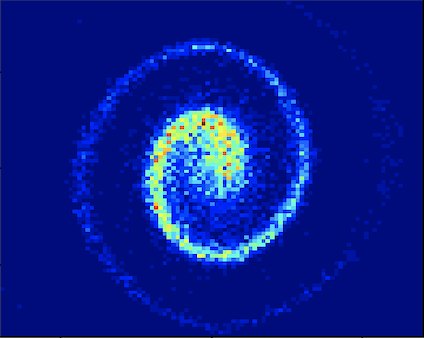
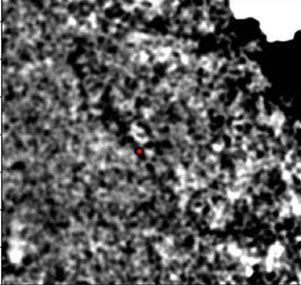
I have worked on phase-space spirals with Prof. Kathryn Johnston since arriving at Columbia in 2022. These spirals were discovered by Antoja et al. (2018) in Gaia DR2 data, who found a spiral structure in the z–vz plane for Solar Neighborhood stars, suggesting a past perturbation. Since then, phase spirals have been found across the Galactic disk, in density, in velocity, and even in chemistry. Much remains unknown, including their cause and how they evolve over time.
I use basis function expansions (BFEs) and Singular Spectrum Analysis (SSA) on simulations to understand correlations and trends in phase-spiral properties across large scales of galactic disks. In Tavangar et al. (2026) we found that phase spirals wind up differently in different parts of the disk: inner-disk spirals are substantially delayed in winding compared to the outer disk. This matters for interpretation, because perturbation times derived from outer-disk phase spirals are likely closer to the true perturbation times. It also highlights the importance of understanding how self-gravity affects phase-spiral evolution, which we begin to explore and which remains an open question.
In an upcoming paper, I explore correlations between phase-spiral amplitudes across galactic disks, which give a new way to probe the nature of the perturbation that caused the spirals. In the next few years I'm excited to use these tools to connect simulations to observations and learn more about the history of the Milky Way, and possibly to explore a connection to small-scale dark matter halos.